blueDental
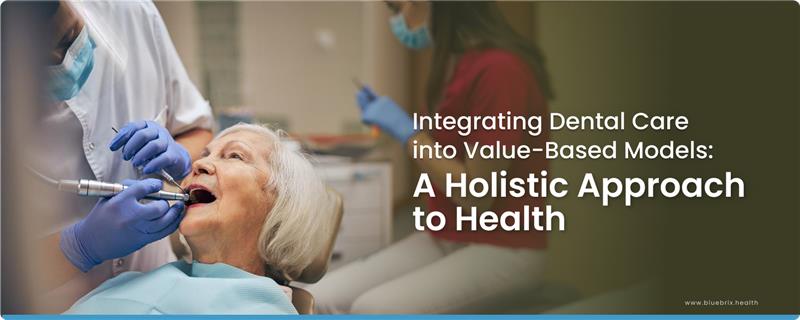
In the grand tapestry of healthcare, we’ve long treated the mouth as a separate entity, a lone ranger detached from the rest of the body. But as any good weaver knows, neglecting a single thread can unravel the entire fabric. It’s time we reconsider this fragmented approach. The integration of dental care into Value-Based Care (VBC) models isn’t just a novel idea—it’s a necessary evolution for a truly holistic healthcare system.
The Mouth as a Mirror to the Body
I recall a story about a gentleman named John, a hardworking father of three. Despite managing his diabetes diligently, his health was on a quiet decline. It wasn’t until a routine dental checkup revealed severe periodontal disease that the pieces of his health puzzle began to fit. Treating his gum disease didn’t just save his teeth; it stabilized his blood sugar levels. John’s story isn’t unique; it’s emblematic of a healthcare system that often misses the forest for the trees.
The connection between oral health and systemic health is well-documented. The American Dental Association (ADA) notes, “Periodontal disease has been linked to several systemic conditions, including heart disease and diabetes.” Ignoring this link isn’t just oversight—it’s a disservice to patients who trust us with their well-being.
Advantages of Integration
1. Enhanced Care Coordination: When dental care is woven into care management solutions, providers across disciplines can communicate seamlessly. According to a study published in the Journal of the American Medical Association (JAMA), integrated care models lead to “improved patient outcomes and reduced healthcare costs through coordinated efforts.” Imagine a healthcare team where dentists, physicians, and specialists share insights and strategize collectively. The patient’s mouth isn’t just an isolated cavity; it’s part of a comprehensive health profile.
2. Improved Patient Outcomes: The Centers for Disease Control and Prevention (CDC) highlights that “poor oral health is associated with other chronic diseases such as diabetes and heart disease.” By addressing dental issues proactively, we can mitigate risks that exacerbate these chronic conditions. In John’s case, integrating dental care didn’t just treat his symptoms—it addressed an underlying issue affecting his overall health.
3. Cost Reduction: The Health Policy Institute reports that emergency dental visits cost the U.S. healthcare system over $2 billion annually. Many of these visits are preventable with regular dental care. By integrating dental services into VBC models, we can shift from expensive emergency treatments to cost-effective preventive care.
4. Enhanced Patient Experience: Patients often navigate a labyrinth of appointments and providers. Integrated care simplifies this journey. As the National Academy of Medicine states, “Patient-centered care that is coordinated and accessible leads to better health outcomes and patient satisfaction.”
Integrated Care Management Solutions vs. Stand-Alone Models
In stand-alone models, dental care exists in silos. Providers may unknowingly work at cross purposes, and critical health indicators can slip through the cracks. Integrated care management solutions offer a unified approach, breaking down these silos.
A report by the World Health Organization (WHO) emphasizes that “integrated health services can improve the quality of care and enhance health outcomes by bringing together inputs, delivery, management, and organization of services related to diagnosis, treatment, care, rehabilitation, and health promotion.”
Implementing Integration
Change requires more than good intentions; it demands actionable strategies.
• Technological Integration: Investing in interoperable or Integrated Electronic Health Records (EHRs) is crucial. The Office of the National Coordinator for Health Information Technology (ONC) advocates for systems that “support the seamless and secure flow of information to enable coordinated, patient-centered care.”
• Financial Incentives: Developing payment models that reward integrated care is essential. The Healthcare Financial Management Association (HFMA) suggests that “value-based payment models that include dental care can align incentives across providers.”
• Policy Support: Advocacy for supportive legislation can pave the way for integration. The Patient Protection and Affordable Care Act includes provisions for oral health, but more targeted policies are needed to facilitate true integration.
• Education and Training: Encouraging interdisciplinary education ensures that providers are prepared for collaborative practice. The Interprofessional Education Collaborative (IPEC) states that “team-based, patient-centered care is enhanced when health professions students are educated together.”
A Fresh Perspective: Technology as a Catalyst
The advent of tele-dentistry and artificial intelligence offers new avenues for integration. During the COVID-19 pandemic, tele-dentistry emerged as a vital tool. A study in the International Journal of Environmental Research and Public Health found that “tele-dentistry can effectively deliver dental care services and has the potential to improve access to care.”
Artificial intelligence can aid in predictive analytics, identifying patients at risk for both dental and systemic diseases. Leveraging technology bridges gaps not just between providers, but also between patients and the care they need.
A smile is more than a smile
We stand at a crossroads. The path we choose will define the future of healthcare. Integrating dental care into Value-Based Models isn’t merely an administrative adjustment—it’s a commitment to treating the patient as a whole.
As Dr. C. Everett Koop, former U.S. Surgeon General, wisely said, “You’re not healthy without good oral health.” It’s time we heed these words, recognizing that every aspect of health is interconnected.
By embracing integration, we honor our responsibility to provide comprehensive, compassionate care. We create a system where stories like John’s are no longer exceptions but the standard. The mouth, after all, doesn’t exist in isolation—and neither should our approach to health.
References
https://www.cdc.gov/oral-health/about/
https://www.nap.edu/read/13444/chapter/1
https://www.govinfo.gov/content/pkg/PLAW-111publ148/pdf/PLAW-111publ148.pdf
https://www.ipecollaborative.org/core-competencies
https://www.nidcr.nih.gov/sites/default/files/2017-10/hck1ocv.%40www.surgeon.fullrpt.pdf
